The vibrant yellows.
The glowing oranges.
The rich blues and reds.
But if you stand in front of an original Afremov painting, you quickly realize there is something else happening.
Something that photographs can never fully capture.
Texture.
For Leonid Afremov, texture was not simply an artistic technique.
It was one of the most important elements of his visual language.
In many ways, texture became just as important as color itself.
It transformed his paintings from images into experiences.
https://afremov.com/oil-paintings/
---
What Is Texture in Art?
Texture refers to the surface quality of an artwork.
It can be:
* smooth,
* rough,
* soft,
* thick,
* layered,
* or highly dimensional.
Artists create texture in different ways depending on their medium and technique.
Some textures are implied, meaning they create the illusion of texture through paint.
Others are physical, meaning the surface itself is raised and can actually be felt.
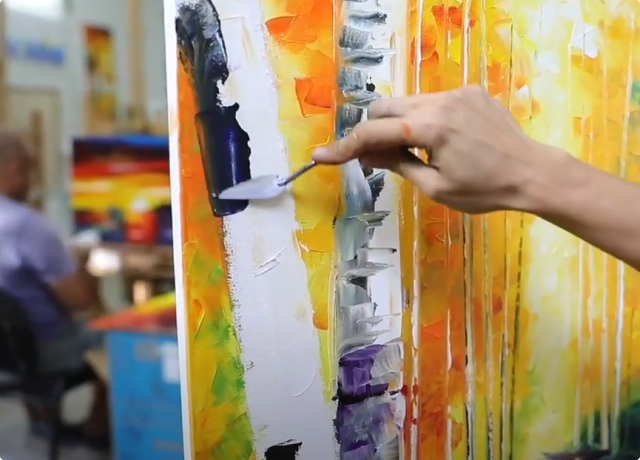
Leonid Afremov specialized in physical texture.
His paintings are famous for their dramatic three-dimensional surfaces created with thick oil paint and palette knives.
---
Why Texture Matters
Texture adds another layer to the viewing experience.
It creates:
* depth,
* movement,
* visual interest,
* and emotional impact.
A painting with rich texture changes depending on:
* the lighting,
* the viewing angle,
* and the distance from which it is viewed.
As light moves across the surface, different areas catch and reflect it in unique ways.
The painting appears alive.
This dynamic quality is one reason original textured artwork often feels so different from a digital image.
---
The Palette Knife Revolution
Most painters work primarily with brushes.
Leonid Afremov chose a different path.
His signature tool was the palette knife.
Originally designed for mixing paint, the palette knife allowed him to apply thick layers of oil paint directly onto the canvas.
Instead of smooth transitions, he created:
* ridges,
* peaks,
* layers,
* and bold strokes.
Each mark remained visible.
Each stroke became part of the finished artwork.
The texture was not hidden.
It was celebrated.
---
Texture Became His Signature
Many artists are recognized by:
* subject matter,
* color palette,
* or composition.
Leonid became instantly recognizable because of texture.
Even from across a room, collectors can often identify an Afremov painting by the distinctive palette knife surface.
The texture creates a visual rhythm that runs throughout the composition.
Trees.
Reflections.
Streetlights.
Musicians.
Autumn leaves.
Everything is unified through the same expressive language of paint.
---
Why Photographs Never Tell the Full Story
One of the most common comments we hear from collectors is:
> "The original is so much more impressive than the photo."
This reaction is usually connected to texture.
Photographs capture color reasonably well.
They capture composition.
They capture subject matter.
What they cannot fully reproduce is the physical presence of paint.
Standing in front of an original Afremov painting reveals:
* shadows between paint ridges,
* light reflecting from textured surfaces,
* subtle variations in thickness,
* and countless details hidden within the layers.
The painting becomes almost sculptural.
---
Texture Creates Movement
One reason Afremov's paintings feel so dynamic is that texture creates movement.
The palette knife strokes naturally guide the viewer's eye across the canvas.
The raised paint creates directional energy.
The artwork feels active and alive.
A rainy street appears to shimmer.
Leaves seem to dance in the wind.
Reflections appear to ripple across wet pavement.
The texture contributes directly to the emotional atmosphere of the painting.
---
Texture and Light Work Together
Leonid was fascinated by light.
Streetlamps.
Sunsets.
Reflections.
Moonlight.
Windows glowing in the night.
Texture allowed him to enhance these effects dramatically.
As light strikes the raised paint, tiny highlights appear across the surface.
The painting literally interacts with light in the room.
This is one reason Afremov's work often changes throughout the day depending on natural and artificial lighting conditions.
The artwork never feels static.
---
More Than a Technique
For Leonid, texture was not simply a technical choice.
It was an emotional one.
The thick layers of paint communicate energy and confidence.
The visible strokes reveal the artist's hand.
Nothing is hidden.
Nothing is overly polished.
Every mark contributes to the personality of the work.
Collectors often describe Afremov's paintings as feeling:
* warm,
* human,
* expressive,
* and alive.
Texture plays a major role in creating that reaction.
---
Why Collectors Love Textured Art
Many collectors are drawn to textured paintings because they create a stronger physical presence within a space.
The artwork feels substantial.
It interacts with light.
It invites closer inspection.
Visitors often find themselves stepping closer to examine the details.
Then stepping back to appreciate the entire composition.
This ongoing visual discovery becomes part of the enjoyment of living with original art.
---
Texture and the Artists of the Afremov Studio
Today, texture remains one of the defining characteristics of many paintings created within the Afremov Art Studio.
Artists continue exploring the possibilities of palette knife painting while developing their own creative voices.
Some focus on:
* landscapes,
* cityscapes,
* florals,
* abstract compositions,
* coastal scenes,
* or contemporary subjects.
Yet many continue drawing inspiration from the idea that paint itself can become part of the artwork's story.
Not merely a tool for creating an image.
But an artistic element in its own right.
---
Why Texture Will Always Matter
Art is often experienced visually.
Texture reminds us that art can also feel physical.
It creates a connection between the viewer and the artist.
A connection built from:
* movement,
* material,
* craftsmanship,
* and human touch.
In an increasingly digital world, texture offers something refreshingly tangible.
It reminds us that a painting is not simply an image.
It is an object created by hand.
---
Among all the elements of art—line, color, shape, space, value, form, and texture—it is difficult to imagine Leonid Afremov's work without texture.
Color may attract viewers initially.
But texture is what often keeps them looking.
It creates movement.
It enhances light.
It adds depth.
It transforms paint into emotion.
And perhaps that is why so many collectors fall in love with Afremov's originals the moment they see them in person.
Because texture does something a photograph never can.
It brings the painting to life.
If you have questions about Leonid Afremov's palette knife technique, textured oil paintings, or the artists working with the Afremov Art Studio today, feel free to click "Post Reply" below and join the conversation.